COFFEE ENEMAS
By Dr. Lawrence Wilson
© September 2016, L.D. Wilson Consultants, Inc.
All
information in this article is for educational purposes only. It is not for the diagnosis, treatment,
prescription or cure of any disease or health condition.
COFFEE ENEMAS
INTRODUCTION
Articles from the late 1800s reported that
coffee enemas were helpful in post-operative care; after abdominal surgery, and as treatment for shock in medical and nursing textbooks in the
early 1900s.
retain the coffee
mixture for 15 minutes
enhances detoxification.
A form of Hydrotherapy.
toxic
metals include lead, mercury, cadmium, arsenic, aluminum and nickel. Others commonly found are uranium, beryllium, bismuth, antimony, zirconium, gadolinium, tin.
this to be true because our clients report tasting, smelling, and
experiencing the effects of these drugs many years after taking them, during
what are called purification reactions
or retracings.
I have recommended coffee retention enemas to more than thirty thousand people. I have yet to hear about horrible side effects of any kind, although the procedure is somewhat inconvenient, especially at first. Most people get used to it quickly.
3 tablespoons of
coffee per enema. I recommend only
one to two tablespoons of coffee, or
even less when starting out.
The cumulative and
combined effects of this toxic assault on our bodies has not been studied
sufficiently, at all. However,
their presence is associated with ALL major diseases of the 21st
century.
According the United
States Environmental Protection Agency, toxic chemicals and toxic metals
constitute a great threat to our health.
Fortunately, great progress has been made in the past 50 years or so to
limit them in America. However,
much more needs to be done. To say
that this is the century of toxicity is no exaggeration. The coffee enema is one method, and a
powerful one, to help with this problem.
In addition to
removing toxins from the body, coffee enemas can:
Ø
Clean and heal the
colon
Ø
Detoxify the liver and
colon and help rebuild the liver.
Ø
Reduce many types of
pain.
Ø
Help eliminate many
parasites.
Ø
Reduce and get rid of
many symptoms of general toxicity.
Since toxicity is the cause of dozens of common symptoms from arthritis to cancer, coffee enemas help with many, if not most diseases and
conditions.
Ø
Help with depression, confusion, and general nervous tension.
Ø
Increase mental
clarity, improve energy levels, increase joy and happiness, improve digestion,
and reduce anger.
Ø
Enable clients to get
through difficult healing and purification reactions.
Ø
At least three dozen
clients have confided to me “coffee
enemas saved my life”.
I have recommended coffee retention enemas to more than thirty thousand people. I have yet to hear about horrible side effects of any kind, although the procedure is somewhat inconvenient, especially at first. Most people get used to it quickly.
The coffee retention enema is really quite simple, very
safe when done properly, highly effective, able to be done in the privacy of
your home, and inexpensive. The
use of a bidet toilet attachment can make cleanup easier and better, as well.
Daily coffee
enemas are now a central part of all development
programs. Dr. Eck did not
include them in his original nutritional programs, although he was well aware
of the value of coffee enemas for healing.
HISTORY OF THE COFFEE ENEMA
Ancient history of enemas. Healers have
recommended enemas for thousands of years. A colorful description of an enema is found in the Dead Sea
scrolls. These documents, found recently in the State of Israel
near the Dead Sea, date back at least 2000 years to the time of Jesus. According to the scrolls, the master
Jesus used these methods to perform his miracles of healing:
"Think
not that it is sufficient that the angel of water embrace you outwards only. I
tell you truly, the uncleanness within is greater by much than the uncleanness
without. And he who cleanses himself without, but within remains unclean, is
like to tombs that outwards are painted fair, but are within full of all manner
of horrible uncleannesses and abominations. So I tell
you truly, suffer the angel of water to baptize you also within, that you may
become free from all your past sins, and that within likewise you may become as
pure as the river's foam sporting in the sunlight.
"Seek, therefore, a large trailing gourd, having a
stalk the length of a man; take out its inwards and fill it with water from the
river which the sun has warmed. Hang it upon the branch of a tree, and kneel
upon the ground before the angel of water, and suffer the end of the stalk of
the trailing gourd to enter your hinder parts, that the water may flow through
all your bowels.
Afterwards rest kneeling on the ground before the angel of
water and pray to the living God that he will forgive you all your past sins,
and pray the angel of water that he will free your body from every uncleanness
and disease. Then let the water run out from your body, that it may carry away
from within it all the unclean and evil-smelling things of Satan.
And you shall see with your eyes and smell with your nose
all the abominations, and uncleannesses which defiled
the temple of your body; even all the sins which abode in your body, tormenting
you with all manner of pains.
I tell you truly, baptism with water frees you from all of
these. Renew your baptizing with water on every day of your fast, till the day
when you see that the water which flows out of you is as pure as the river's
foam.
Then betake your body to the coursing river, and there in
the arms of the angel of water render thanks to the living God that he has
freed you from your sins. And this holy baptizing by the angel of water is:
Rebirth unto the new life. For your eyes shall henceforth see, and your ears
shall hear. Sin no more, therefore, after your baptism, that the angels of air
and of water may eternally abide in you and serve you evermore.” – The Essene Gospel Of Peace, Book I, edited by Edmund Bordeaux Szekely, 1981.
Ancient history of coffee. The coffee bean and
plant have been part of herbal medicine, folk medicine and shamanic healing for
years. According to some
historians, coffee originally came from Ethiopia. Then it was introduced into the Middle East, then to Europe,
and it was introduced into the Americas in the 18th century.
It was known as a potent liver remedy, and given
particularly to the elderly and to those who were infirm or ill in the
liver. This is important because
today almost everyone has a toxic liver.
The reason is the proliferation of toxic metals and toxic chemicals
throughout the planet due mainly to industrialization and burning of fossil
fuels.
Modern history of coffee enemas. The coffee was known in the
1800s as a potent liver remedy. In
fact, until about 1984, the coffee enema procedure was listed in the famous Merck
Manual, a handbook for
physicians that is used throughout the earth.
DRS. GERSON, KELLEY, GONZALES, AND OTHERS
Dr. Max Gerson, MD (1881-1959). The man who popularized coffee enemas
more than any other in modern times was Max Gerson,
MD, author of A Cancer Therapy - Results of 50 Cases (1958). Dr. Gerson pioneered nutritional therapy for cancer and other
diseases with excellent results.
His therapy combined coffee enemas with a special diet, juices and a few
other nutritional supplements. The
enemas were an integral part of the therapy.
He
found that to heal his patients of cancer, he had to stop their pain
medication, as it damaged their already weak livers. Coffee enemas, up to 6 per day, would stop the pain without
a need for drugs. They also
enabled the body to absorb and digest tumor tissue and eliminate it safely, an
important stumbling block in natural cancer therapies. Today, Dr. Gerson’s
method is offered today at several clinics, most of which are in Mexico.
I recommend a somewhat different regimen than
did Dr. Gerson. This is because:
1. The
bodies are much weaker today.
2. I
suggest a different diet and different nutritional supplements. As a result, fewer coffee enemas are needed.
Here
are the differences between the Gerson regimen and
what I recommend:
medium or dark roast coffee.

boiling the coffee for exactly 12 minutes. Longer than this can overcook it.
5.
Some other doctors suggest using three or four cups of water. I suggest using only two to three cups of distilled water for an
enema.
William
Donald Kelley, DDS (1925-2005). In 1968,
Dr. Kelley was diagnosed with pancreatic cancer. He carefully researched natural cancer therapies and evolved
a very effective natural approach that used coffee enemas. He wrote about their benefits and
importance in a small book entitled One Answer To Cancer (1969, 1999).
Harold Manner, PhD. Dr. Manner was
another pioneer in natural cancer therapy who highly recommended the use of the
coffee enema as part of his therapy for cancer.
Nicholas Gonzales, MD. Dr. Gonzales
studied under Dr. Kelley and offers the Kelley metabolic cancer therapy. It includes the use of coffee enemas,
and is quite successful.
COFFEE, A REMARKABLE HERB
WHAT IS COFFEE?
Coffee is a seed of a tropical fruited bush or small
tree. It is found all over the
world, although it grows best in certain tropical climates, and often does best
on the sides of mountains that face away from the sun. This makes it harder to cultivate with
machines, as they may not be able to be used on sloping ground.
Most coffee is
grown in South America, Hawaii, China and other parts of Asia, although some is
grown in Africa, as well. The best
is often from South America due to the local soil conditions.
Important issues concerning the growing and processing of
the coffee beans are:
1. Organically grown. Coffee,
as with every crop, can contain pesticide residues. For this reason, I suggest an organically grown coffee, of
which there are many available.
2. Proper fermentation. Once the
beans are harvested and the shells removed, the beans are allowed to ferment,
usually in the same area where they are grown. This must be done properly to remove certain toxins from the
beans. If it is not done properly,
it will affect the flavor and safety of the coffee beans.
3. Roasting. Coffee is an
oily seed of a fruit. When
roasted, the oils in the coffee beans emerge. Roasting must be done properly to also eliminate some toxic
substances. This is one reason I
do not recommend for everyone the very lightly roasted SA Wilson Enema Coffee,
as it is not roasted enough, in my view.
This causes it to have more caffeine, which is probably okay, but it
also allows other substances to remain in the coffee.
4. Rancidity. After
roasting, the coffee is packaged and send to the marketplace. Some coffee becomes rancid in this
process, as it contains polyunsaturated oils. This makes the coffee somewhat irritating, and often harder
to hold inside the colon. The
coffee brand called ‘bullet-proof coffee’ claims to avoid this problem
completely by careful handling of the coffee.
THE BEST COFFEE FOR ENEMAS
Avoid the Gerson coffee, Purelife
Coffee and the SA Wilson enema coffee.
They are quite stimulating and not working as well.
Here are my
suggestions for the best coffee:
1. Bulletproof coffee.
2. I suggest a South American coffee, although others may be fine,
as well.
3. I suggest a medium or dark roast coffee for most people. Research in Molecular
Nutrition & Food Research found that dark roast coffee
restored blood levels of the antioxidants vitamin E and glutathione more effectively than light roast
coffee. The dark roast also led to
a significant body weight reduction in pre-obese volunteers, whereas the light
roast did not.
Separate research
also showed that dark roast coffee produces more of a chemical called N-methylpyridinium. This chemical is produced during the roasting process, and
the darker the roast, the more N-methylpyridinium it
contains.
Caffeine levels vary
depending on the degree of roasting of the coffee. Darker roasts often contain less caffeine than lighter
roasts.
Some authorities
suggest a light roast coffee, or golden coffee such as the “enema coffee” sold
by S.A. Wilson in Canada. It is
much more yin, which is not desirable.
Light roast coffee also contains a toxin that I do not believe should be
there. Roasting the coffee more
gets rid of this yin toxin. The
light roasted coffee may be somewhat easier to use for some people, but it is
not best, in my view.
4. A non-oily coffee is probably best. Some coffee beans are
quite oily, while other coffees are quite dry. I suggest using one that is drier, not oily. The reason is that the oil is often
rancid, adding a toxin to the coffee.
5. Less moldy coffee is best.
This is hard to identify. A
more costly brand of coffee called “upgraded coffee” is sold at
www.bulletproofexec.com that claims to be mold-free. Some who have difficulty with the enemas report doing better
with this brand of coffee, while for many people the brand does not seem to
matter as much.
6. Organically grown is likely best. Coffees often have pesticides on them. Organically grown coffee may have fewer
pesticide residues, and this is beneficial.
COFFEE AS A
BEVERAGE
A cup of coffee a day is generally acceptable. However, coffee is irritating to the
stomach, and I do not recommend drinking it. It is very different from a coffee enema. Drinking coffee has some of the same
effects as the coffee enema. It is
a diuretic and can help with constipation. However, constipation disappears with a proper diet and
plenty of water to drink. I do not
recommend drinking coffee because it is somewhat toxic, and not effective for
detoxification.
Avoid strong
coffees. Excessive caffeine is not helpful for
the body at all, and just acts as a CNS stimulant. For this reason, the recent habit in
the West of drinking very strong coffees such as cappuccino, expresso and lattes tends to be harmful and quite
irritating.
The habit derives from the old Turkish style of making coffee
so strong it is almost like drinking mud.
Those who do this are not healthy, and the caffeine and other toxins in
the coffee build up in the liver and elsewhere, damaging health. The nervous system can be eventually
harmed badly by this habit.
EFFECTS OF COFFEE ENEMAS
"In
general, coffee enemas are an important tool for physicians who try to detoxify
the body. This is not to say they
are a panacea. They certainly
require more research. But coffee
enemas are serious business: their potential should be explored by good
research - not mined for cheap shots at alternative medicine or derisively
dismissed as yet another crackpot fad.” – Ralph Moss, PhD.
Coffee enemas are helpful to heal most health
conditions. This occurs because of
the many health benefits of this procedure. Not only are the following effects extremely beneficial, but
the combination of these effects is even more powerful.
EFFECTS OF COFFEE ENEMAS ON THE COLON
Coffee applied rectally has the following properties. There is some overlap among these
effects:
1. An astringent.
This is an
herbal property that means it peels the top layer of skin or mucous
membrane. This is helpful for some
healing, as the top layer of skin or mucous membrane is often ready to come off
anyway, and is loaded with toxins.
So it is like cleaning the surface layer of the mucous membrane of the
colon and perhaps the liver, as well.
2. Mechanical
cleansing.
The enema
mechanically washes out the colon, removing toxic substances, and often nests
of parasites, bacteria, yeast colonies, and other debris.
Enemas also stimulate the colon slightly by dilating it a
little, and often by altering its temperature somewhat – either making it
a little hotter or a little colder.
Another mechanical effect is to increase peristalsis and cause the
colon to become active, emptying its contents more completely.
Repeated enemas, especially accompanied by colon massage,
helps remove impacted feces and food residues, which is common. Certain food items, especially white, refined flour, can
turn hard in the colon and stick to its walls.
Repeat enemas also help clean out so-called ‘pockets’ or diverticuli in the
colon. These are slight expansions
or dilations in the wall of the colon of most adults that trap food particles,
bacteria and often harbor parasitic organisms such as worms, yeasts and others.
Many clients report that upon beginning coffee enemas, they
notice either crawling or dead creatures that show up in the toilet when they
release their coffee enemas.
Our clients also report that their colonoscopies, after
using daily coffee enemas for a few years, revealed amazingly clean and
healthy-looking colons. One
client, age 79, was told by his doctor that his colon was so clean he never
needed to return for another colonoscopy.
Dr. Peter Lechner, who conducted a trial of
the Gerson cancer therapy in the post-surgical
treatment of metastasized colorectal cancers under the aegis of the Landeskrankenhaus of Graz, Austria, reported in 1984,
“Coffee enemas have a definite effect on the colon which can be observed with an
endoscope.”
3. Enemas, in general, and the coffee enema in
particular, can help stimulate, balance and clear many reflex points that run from the colon segments to
every organ and tissue of the body. This is not well known, but is true.
The
practical application of this fact is that a problem in a particular part of
the colon, such as the ascending colon, can cause a serious disorder elsewhere
in the body through a type of reflex or resonance effect. This is considered controversial and
strange. However, Bernard Jensen,
DC, ND, in his book entitled The Science
And Practice Of Iridology, documents this idea with case histories,
including flat-plate x-rays of the colon.
EFFECTS ELSEWHERE
1. Anti-oxidant
effects. Singlet oxygen atoms cause oxidative damage in the body
tissues. Coffee contains powerful
anti-oxidant chemicals that help prevent this oxidative damage. These are particularly helpful for the
liver, which is highly susceptible to oxidant damage.
Unlike other antioxidants such as vitamin C, alpha lipoic acid and vitamin E, the antioxidants in coffee are
more yang in macrobiotic
terminology. This is a great
advantage because the bodies are already too yin. Taking yin antioxidants is harmful, even if they provide
symptomatic relief.
In fact, a nutritional balancing program with coffee enemas
reduces the need for supplementary antioxidants because the program helps remove
oxidant sources. These include oxide
forms of iron, copper, manganese and aluminum, among other minerals. A separate article describes this phenomenon: Iron, Manganese and
Aluminum – The Amigos.
2. Increased pH or alkalinity of the entire
intestinal tract. This is due to enhanced bile flow, most likely. Increasing the alkalinity of the small
intestine makes it much less hospitable for parasites. It also helps destroy many other types
of infections in the small and large intestines. This can help improve the quality of the flora of the
intestines and reduce dysbiosis or improper “bugs”
in the intestines.
3. Palmitic acids. In the late 1970s and early 1980s, researchers in the lab of
Lee Wattenberg identified salts of palmitic acids (kahweol and cafestol palmitate) in coffee.
These act as potent enhancers of glutathione S-transferase which is an important enzyme in the
liver.
It is part of a major
detoxification system that catalyzes the binding of many toxins from the blood
stream to the sulfhydryl group of glutathione. For this reason, the glutathione S-transferase system is an important mechanism to get rid of
cancer-causing
chemicals.
Adding coffee beans to the diets of mice enhanced
glutathione S-transferase 600% in the liver and 700%
in the small bowel. A similar
stimulation by coffee of glutathione S-transferase in
humans is probable.
Dr. Max Gerson,
MD, a major proponent of the use of coffee enemas, wrote that:
“Heubner and Meyer of Goettingen
University, Germany had shown in animal models that rectal administration of
caffeine would dilate bile ducts and promote bile flow. Theophylline and theobromine, major constituents of coffee, dilate blood vessels and
counter inflammation of the gut.
The palmitates of coffee
enhance glutathione S-transferase,
which is responsible for the removal of many toxins from the blood. Finally, the water in the enema
stimulates peristalsis or the movement
of toxic substances from the duodenum or upper intestine, through the
intestine, and out through the rectum.”
4. Caffeine
effects. Caffeine is a mild central
nervous stimulant, but not as toxic as most stimulants. Its effects include,
dilation of the bile ducts. The editors of Physiological Chemistry and Physics
stated, “caffeine enemas cause dilation of bile ducts, which facilitates
excretion of toxic cancer breakdown products by the liver and dialysis of toxic
products from blood across the colonic wall.”
This
property of caffeine, when administered rectally, is called a choleretic.
A choleretic is
a substance that increases bile flow.
While other agents classed as choleretics
increase bile flow from the liver, most do little to enhance detoxifying enzyme
systems, and they do not ensure the passage of bile from the intestines out the
rectum. Bile is normally reabsorbed
up to 9 or 10 times before working its way out the intestines in feces.
The enzyme-enhancing ability of the coffee enema is unique
among choleretics. Because it does not allow as much reabsorption
of toxic bile by the liver across the gut wall, it is a powerful means of
detoxifying the blood stream through existing enzyme systems in the liver and
small bowel.
Because clinical practice has shown coffee enemas to be well
tolerated by patients when used as frequently as every four hours, the coffee
enema may be viewed as one of the most effective and interesting choleretics in the medical literature.
5. A wonderful
“kick starter” for the entire digestive tract. This is a somewhat esoteric concept. However, some remedies and procedures
are able to cause a yang or contracting effect that activates an area of the
body while causing few adverse effects, when done in moderation. Coffee in the rectum is one of the best
procedures to kick start or “crank” the digestive system, in particular. (This is like cranking a gasoline
engine, which one does every time one starts an automobile).
Other “crankers” or yang
stimulants include supplements and herbs such as trimethylglycine,
garlic, cayenne and ginseng. I do
not recommend ginseng because all of it is toxic today.
6. Nutritional effects – selenium.
Coffee contains a very desirable form of selenium needed by almost
everyone today. Few foods contain
this particularly necessary compound, which is not well-absorbed by mouth, but
is better absorbed through the rectum.
This is a primary reason for
the enzymatic activity of coffee upon liver detoxification pathways. This needs to be researched further, as
I do not have more confirmation of this fact other than our observations.
7. Nutritional effects – zinc. Coffee also contains a small amount of an important zinc
compound. Once again, it is very
needed today, and is not well absorbed by mouth, but is better absorbed
rectally. This needs to be
researched further, as I do not have more confirmation of this fact other than
our observations.
8. Nutritional effects – potassium. Coffee
contains a healthful form of potassium that can be absorbed through the wall of
the colon. This is a better form
of potassium than that found in most fruits. The latter is often a slightly toxic potassium compound that
fruit trees tend to absorb from superphosphate fertilizers used on most fruit
crops. Even organic fruit contains
this toxic form of potassium today.
9. Coffee antidotes or neutralizes many
harmful frequencies of illness in the body. This unusual trait of coffee, not shared by other herbs or
remedies, is very well known in the science of homeopathy. Patients are
often told by homeopathic doctors never to drink coffee. The coffee can negate
the effects of many vibrational remedies, including
homeopathic remedies.
This is a very important reason for using coffee enemas. The coffee seems able to clear a wide range of harmful subtle energies in the human system in a way that no other plant or animal substance can do.
This is a very important reason for using coffee enemas. The coffee seems able to clear a wide range of harmful subtle energies in the human system in a way that no other plant or animal substance can do.
Repeated use of the coffee implant clears these vibrational frequencies at deeper and deeper levels, each
time the procedure is used. These
energies definitely affect our health, although they are quite subtle. For more information about some
problems of vibrational frequencies on the body,
please read Psychotronics
on this website.
10. In acupuncture terms, coffee enemas enhance the liver
meridian and balance the large intestine meridian. In the science of acupuncture, restoring health depends
upon balancing about a dozen energy channels or meridians that run up and down
the body. Introducing water and
coffee into the colon weakens or inhibits the large intestine meridian
somewhat. This tends to enhance
the liver meridian, according to acupuncture theory.
Commonly, the liver
is weak and the large intestine meridian is over stimulated or overactive due
to the presence of toxins in the large bowel. Even if it is not overactive, the effect of the coffee enema,
in terms of acupuncture meridians, is to enhance the energy of the liver/gall
bladder meridian, to some degree.
11. Protection against toxins in coffee. Coffee contains some toxic metals such as lead and cadmium, and some toxic alkaloids. Also, ground coffee may be somewhat rancid, as it contains
polyunsaturated oils that can quickly become rancid. However, from our experience, when taken by rectum, these
toxins are not absorbed nearly as much as when the coffee is taken orally.
This occurs because the colon is designed to absorb nutrients, while filtering out and leaving behind toxic substances inside the colon. In fact, a healthy colon is quite amazing in its ability to absorb nutrients while protecting the body from a wide variety of toxic substances.
This occurs because the colon is designed to absorb nutrients, while filtering out and leaving behind toxic substances inside the colon. In fact, a healthy colon is quite amazing in its ability to absorb nutrients while protecting the body from a wide variety of toxic substances.
This is the reason
why drinking coffee is somewhat toxic, but coffee used in an enema is much less
so. In fact, we have seen very
little toxicity from repeated coffee retention enemas, while those who drink
coffee regularly exhibit some toxicity from the beverage.
12. Promotes downward motion.
Retaining a coffee enema for
15 minutes or longer forces one’s attention downward. Two reasons for this are 1) the presence of some water in
the colon, and 2) the need to keep the anal sphincter shut tightly. Retaining the enema for up to an hour
is best for this purpose.
Moving energy downward from the head toward the feet
is extremely therapeutic. It
assists with grounding and centering, but it does much more than this. It is a powerful healing method all by
itself. This is a complex
topic. For more information please
read Downward-Moving Energy And Healing on
this site.
13. Yang effect. Most people’s bodies today are too yin, in macrobiotic terms,
especially those who are ill. Yin
means cold, expanded, flaccid, and usually it also means ill. A problem with many remedies and healing
procedures, including vitamins and most herbs, is that they make the body even
more yin.
Coffee is a more yang herb, even though it grows in tropical climates. It becomes much more yang when roasted thoroughly and boiled for 12 minutes only. This also gets rid of some of the caffeine, a yin substance (although some caffeine is necessary for the desired effects). The yang quality of coffee is a great advantage of this procedure over other herbal, natural and medical methods for cleansing the liver and colon.
Coffee is a more yang herb, even though it grows in tropical climates. It becomes much more yang when roasted thoroughly and boiled for 12 minutes only. This also gets rid of some of the caffeine, a yin substance (although some caffeine is necessary for the desired effects). The yang quality of coffee is a great advantage of this procedure over other herbal, natural and medical methods for cleansing the liver and colon.
The yang effect is
due to a combination of the nutritional factors in coffee, and its ability to
remove yin toxins from the body such as toxic metals and toxic chemicals. To
learn more about this vital subject, please read Yin
and Yang Healing and Yin Disease on this
website.
14. Sympathetic nervous system relaxation. Coffee enemas help relax the
sympathetic or fight-or-flight nervous system. Many people report this. This may seem odd, since coffee contains caffeine, which is
a stimulant.
Possible reasons for
relaxation of the sympathetic nervous system include:
a) stimulation of two
important parasympathetic organs, the liver and the large intestine.
b) nutrients in the
coffee.
c) removal of
irritating toxins from the body rapidly and thoroughly.
d) the relaxing
downward motion of subtle energy described in paragraph #12 above. To learn more about the sympathetic
nervous system and its importance, please read Autonomic
Nervous System Balancing on this website.
15. Improved hydration. While
it may seem minor, enhanced hydration of the body from doing enemas can be a
major benefit of coffee retention enemas.
Many people are quite dehydrated today. Common reasons for dehydration are:
a) Not drinking enough water.
Most adults need close to three liters or quarts of drinking water (not
other beverages) per day. Do not
drink this with meals, however.
Drink one hour after meals up to about half an hour before meals so as
not to dilute the stomach juices.
b) Drinking incorrect types of water such as reverse osmosis water,
which does not appear to hydrate the body well. Another type of water I do not recommend are any alkaline
waters that come from the alkaline water machines.
c) Ingesting substances that tend to dehydrate the body. These include all sugars, all fruit,
caffeine and alcohol. One cup of
tea or coffee daily is okay, but no more.
Soda pop may contain a lot of caffeine.
The addition of
several cups of water in the enema improves this serious, but sometimes
difficult-to-identify situation.
Improved dehydration also greatly enhances detoxification of the body
and overall health. For more on
this subject, please read Hydration on this site.
16. Improved activity of the energy centers. As energy moves downward it
helps all of the physical energy centers, called chakras in Sanskrit, to become more active and more balanced.
17. Reduced autointoxication.
Autointoxication is the production of toxins within the body, usually due to
the action of bacteria and yeasts upon partially digested food. Most is the result of fermentation or rotting (putrefaction) of food. A lot of it occurs in people’s large
intestines. This can cause gas,
bloating and foul smelling stools.
However, even if it causes no symptoms, it can damage health
significantly, in some cases.
By cleaning the colon
of yeasts, parasites and other pathogenic organisms, and by increasing the bile
flow, coffee enemas greatly reduce autointoxication. For more on this topic, read Autointoxication
on this site.
18. Assisting the lymphatic system. Coffee
enemas greatly assist lymphatic drainage that occurs through the Peyer’s Patches.
These are extremely important lymph glands located along certain areas
of the small intestine. Although
the coffee solution does not reach this far, the coffee enema appears to assist
the Peyer’s patches due to reflex effects described
later in this article.
19. Reduced congestion of the internal organs. An
effect of the caffeine and the astringent action of the coffee is to help
reduce congestion in the liver and elsewhere.
20. Reduced density of the body. Toxic
metals in excess and other poisons in the body actually increase its density a
little bit. Removing toxic metals
and some toxic chemicals decreases the density of the body. This is helpful for healing.
21. Helping to reduce yeast and other infections throughout the body. This occurs due to a combination of
all the effects described in the paragraphs above. For more on the topic of systemic yeast,
please read Candida Albicans
on this site.
22. Improving the skin.
The body must eliminate
poisons somehow. If the colon is
not working well, the body must use alternative elimination channels. One of these is the skin. This causes skin eruptions including
dermatitis, acne, eczema, psoriasis and perhaps other types of skin conditions. Coffee enemas assist the skin by
restoring elimination through the liver and colon.
23. A form of quiet discipline and a concentration exercise. This
may seem unusual, but just lying down and holding the anal sphincter closed for
15 or so minutes is a form of concentration exercise that teaches discipline,
relaxation, coordination and other mental traits that are helpful for most
people.
24. Helping the brain. Many clients report feeling more clear-headed after a coffee
enema. The caffeine may be a
factor, although not much is absorbed from the colon. Stimulation of the colon reflexes to the brain is another
possible reason for beneficial effects on the brain. Temporarily lowering copper and ridding the body of toxins
are other possible reasons for this beneficial effect.
Different from
drinking coffee. Coffee
ingested as a beverage is absorbed from the stomach. This differs from absorption from the colon, which occurs with an enema. The colon seems to block the absorption
of certain toxins found in coffee, including cadmium and some of the caffeine.
Drinking one cup of coffee daily is okay, but not recommended. Drinking more than one cup is harmful
for most people.
EQUIPMENT USED FOR COFFEE ENEMAS
“Doctors at the University of Minnesota
showed that coffee administered rectally stimulates an enzyme system in the
liver called glutathione S-transferase by 600%-700%
above normal activity levels. This
enzyme reacts with free radicals (which cause cell damage) in the bloodstream
and makes them inert. These
neutralized substances become dissolved in the bile, are released through the
bile flow from the liver and gallbladder, and are excreted through the
intestinal tract.” – The Scientific
Basis of Coffee Enemas, The Gerson Institute.
Basic equipment
required for coffee enemas are either an enema
bag or enema bucket. One could use a fleet enema bottle, but
this may not hold enough coffee solution.
One could also use a colonic irrigation machine if it is designed to
administer substances other than water.
This chapter discusses the advantages and disadvantages of each kind of
enema equipment.
BUCKETS – PLASTIC AND STAINLESS
Some people prefer enema buckets to bags. A reason for this is cleanliness. Since the buckets are open at the top
they can be thoroughly cleaned.
The plastic bucket is less expensive, but may hold on to more bacteria. Both are very good. The stainless steel bucket is more
expensive.
ENEMA BAGS – OPEN AND CLOSED
Below is a standard enema bag. They come in two configurations – open top or closed
top. The open top bag is easier to
clean because the opening is larger.
However, it is also easier to spill the coffee. The closed top bag is harder to clean,
but not really difficult to rinse out.
It has the advantage that coffee cannot spill out because the opening
can be sealed.
Figure 1. A standard rubber enema/douche bag
ENEMA NOZZLES
These are usually
made of hard plastic. Most enema
bags and buckets come with two tips.
The smaller tip is for enemas, while the larger tip is for douching, but
not for enemas. The hard plastic
tips are easy to clean and can be removed from the tubing easily.
Some enema kits
do not use a hard plastic tip.
Instead, the tubing just has one or two holes in the end and one inserts
the tube into the rectum. These
are softer but more difficult to clean.
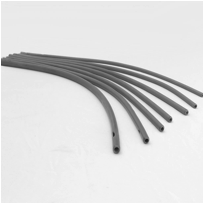
Some people
prefer to use a soft rubber colon tube or a urinary catheter instead of the
plastic enema tip. The tubes are
described below. The urinary
catheter is much smaller in diameter, so it is easier for some people to
insert, especially if one has anal strictures or hemorrhoids.
COLON TUBES
Most practitioners
just recommend inserting the standard enema tip into the rectum lubricated with
a little petroleum jelly, soap, or oil.
Some people, however, suggest using a flexible rubber colon tube connected
to the enema tip. Usually, one
first inserts the colon tube all the way into the rectum, and then attaches the
enema tip to the protruding end of the colon tube.
Reasons for using the
colon tube are:
1. The colon tube
releases the water and coffee farther inside the colon. This helps it reach deep inside the
colon.
2. The colon tube
maybe thinner and softer and thus may go in easier.
Most people do not
use colon tubes, which are more difficult to insert. I do not believe using a colon tube is necessary in most cases,
though it will move the coffee mixture around the colon better.
Figure
2. An assortment of rubber colon tubes
FLEET ENEMA BOTTLES
These
are inexpensive plastic bottles with a removable top sold in drugstores. They come filled with usually salt
water, and are designed for a single use enema to just clean the colon. Some people like to empty out the salt
water and fill the bottle with coffee solution and use it for coffee enemas.
Advantages
of these bottles is there is no tube to wash and the bottle is very light in
weight and simple to use.
Disadvantages of the fleet enema bottles are:
1. There is no clamp,
so as soon as one turns the bottle upside down to insert it the liquid will
begin flowing out of it. This is
often very messy.
2. The small bottle
may not hold enough liquid. The
largest fleet enema bottle I have seen hold 8 ounces. This is barely enough.
3. It is difficult to
clean the inside of the bottle since the bottle has a small neck.
4. The bottle is
rather fragile and may not last.
COLONIC IRRIGATION MACHINES
These are costly
machines (over $1000 USD) and are not usually used at home for coffee
enemas. Some colon therapists,
however, may be able to use them in their offices to administer a coffee enema.
The advantage of
the machine is that it uses a thicker enema tip that allows water to flow in
and flow out. This means that when
doing an enema one does not have to go to the toilet to empty out the coffee. This is easier and cleaner.
A COFFEE ENEMA PROCEDURE
"Coffee enemas are not given for the function
of the intestines, but for the stimulation of the liver." - Max Gerson, MD
SAFETY FIRST
All procedures
recommended on this website begin with a safety section. It is most important.
1. Start with only a
teaspoon of coffee in case you are sensitive to it.
2. Never force the
enema tip into the rectum.
Lubricate it and twist it slowly and gently, aiming it correctly.
3. Never retain the
enema if the pressure to release it is too high. Read about what to do if you cannot retain the enema.
4. Never force
anything.
5. Be sure the
temperature of the coffee liquid is comfortable to the touch.
6. Coffee enemas take
some getting used to. However,
with a little practice they get much easier. This chapter will help with this task. In fact, many of our clients look
forward to them.
7. Do not use more
than about 2 cups of water in the enema. If you cannot retain the enema well,
start by using 1.5 cups of water.
8.
Distilled water or a spring water are generally best for coffee
enemas. If these are not
available, one can use carbon-only-filtered tap water for enemas.
9. Doing two coffee
enemas, back to back, is extremely powerful. Just make enough coffee for two enemas and do one, expel it
and do another right afterwards.
10. You may retain
the enema more than 15 minutes. It
is not essential, but there are benefits to retaining the enema for up to an
hour.
11. Some people can
do up to four enemas daily, each with up to two tablespoons of coffee in each
one. Others cannot handle this
much coffee. Please be careful
when starting enemas. If in doubt, begin with only up to 4 tablespoons of
coffee daily, even if you do four enemas per day.
Dr. Gerson’s protocol. Dr. Max Gerson,
MD, who popularized coffee enemas, used much more coffee. However, times have changed a lot since
he lived almost 80 years ago.
Important differences between then and now are:
1. Most of the bodies
are much more yin today. This
means more delicate, and often more ill.
This is due to radiation toxicity from A-bomb tests, powerplants
and other sources. It is also due
to more chemical toxins and toxic metals in the food, and electromagnetic
stress that did not exist 80 years ago.
2. The colons are
more permeable or “leaky” today.
As a result, more of the toxins from the coffee get into the body. This is one reason we must use less
coffee today.
STEP 1. DECIDE WHERE TO DO YOUR COFFEE CLEANSE AND YOUR
BODY POSITION
Here
are some guidelines so that you will be warm and comfortable.
1. Body position. I suggest lying on your back when doing a coffee
cleanse. Some people prefer to lie
on their side, or they prefer the ‘doggie’ position – on your hands and
knees.
The reasons for lying
on your back are: a) it is relaxing, and b) you can do other development
procedures easiest in this position.
These include the Roy Masters meditation exercise, shining a red heat
lamp on your abdomen, twisting your spine and rubbing your feet. This combination “spa morning routine”
is wonderful, and it is much more difficult if you lie on your side or use the
“doggie” position on all fours.
2. Elevate the hips. If possible, position yourself so that your
hips are slightly higher than your head.
This is easy to accomplish by putting a towel under your hips or lifting
up the feet of your massage table an inch or so with blocks.
The reason for this
is that it will cause the coffee solution to run into your body, helping to
retain the enema. Also, intestinal
gas will tend to move upward to the anal area and be released. The
presence of gas is the main reason some people have difficulty holding the
enema.
3. Location.
A) Many people enjoy
just placing a towel or yoga mat on the floor of the bathroom to lie upon.
B) Some people do
their coffee cleanse in the bathtub, especially if you are not too tall.
C) Some people set up
a cot or massage table to lie upon.
D) I learned to do
coffee enemas in bed, spreading a towel or two on the bed to protect against
spills.
E) Please do not do
enemas in a yoga posture or some other strange position. It is best if you relax, and the best
position for this is lying down.
F)
Another idea is to place a squarish piece of plywood
across your bathtub to lie upon, perhaps covered with a cushion. This may be more comfortable than lying
inside the tub. If you spill some
coffee, it will flow harmlessly into the tub.
4. For children. Coffee enemas are excellent for
children and even babies, providing you are careful. Be sure to use less coffee and less water for children.
The easiest position,
in most cases, is to place the child on his stomach on a bed, with a towel or
better, a bed pan underneath the child’s mid-section. The parent can sit next to the bed.
Lubricate the enema
tip well and insert it very slowly and gently, going straight upward from the
legs. Twist it a little as you
insert it to help it go in. You
may need to place a small washcloth over the anal opening to help retain the
enema. When finished, the child
can turn over and expel the coffee into the bedpan, or get up and expel into
the toilet.
STEP 2. GATHERING THE MATERIALS
* Buy a
standard 2-quart enema bag, or an enema bucket. The bag should come with a hook or handle to hang up the
bag. The bag or the bucket must
also have a plastic hose, an enema tip, and a clamp on the hose.
Enema bags are sold at Target,
Wal-Mart or many drug stores. If
you cannot find one at a local store, you can buy a 2-quart enema bag or bucket
inexpensively online. It should
cost about $10 to $20. USD.
* Buy preferably
some organic, dark roast, and perhaps Columbian regular coffee. This is best, although technically
any regular coffee will work. It can be regular grind or
flaked. Do not buy instant coffee and do
not buy decaffeinated coffee.
For maximum freshness, buy coffee beans and grind your own coffee, but
this is not necessary. Store your
coffee in the freezer for maximum
freshness.
Lighter roast coffee, which is a
lighter color, is more yin and not as good, although it may be easier to hold
in the colon. It may also be less
irritating if you have hemorrhoids.
However, it seems to contain a toxin that is destroyed when the coffee
is roasted more.
STEP 3. PREPARING THE COFFEE
Coffee can be prepared in several
ways: Here are the methods I
suggest:
1.
The best – the 12-minute method.
2.
The standard coffeemaker.
3.
The percolator. This is an older method and is not used
much today.
4.
The newer steam flash method.
5.
The soak or non-boil method.
This is more yin, so it is not quite as good. However, it is fast and perhaps better if you are traveling,
for instance, as you do not need to boil the coffee.
Here are details about each of these
methods.
METHOD #1. The
best – The 12-Minute Method.
1.
Place 1.5 to 2 cups of water in a saucepan. (One cup of water is equal to about 250 ml.) Ideally, use distilled or spring water. Filtered tap water will also work. Spring water or filtered tap water do not absorb quite as
much of the coffee as does distilled water, but they are fine.
2.
Add ½ to two tablespoons of or ground of flaked coffee, and bring it to
a boil. When you start doing coffee enemas, use less coffee, to make sure you
tolerate it well. For example,
begin with just a half teaspoon of coffee and increase the amount when you are
sure you tolerate it well. Then
work up to about one to two tablespoons of coffee.
3.
When the water and coffee boils, turn down the burner and allow it to simmer
for 12 minutes. Your coffee is now
ready, but much too hot.
The
ideal coffee temperature. For
an enema, coffee must be about body temperature or a little lower.
Testing
the coffee temperature. To
test the temperature of your coffee, place a finger in it. It should be a comfortably warm
temperature. If the water is too
hot or very cold, retaining the enema will be more difficult.
4.
Cooling down your coffee. Here
are simple ways to cool down hot coffee:
1. Add some room temperature water.
2. Place the saucepan in a cold
location for a few minutes, such as in the freezer or on a cold floor,
perhaps. Be sure to put it on a
trivet or plate to protect the area from the hot saucepan.
3. Add an ice cube or two made with
purified water.
4. Use only one-half a cup of water to
make the coffee. When it is done,
add the rest of the water, which is at room temperature, and this will cool down
the mixture.
Making
extra coffee to save time. Although fresh is best, to save time you can
make enough coffee for two days worth of enemas. Put the extra coffee in the refrigerator as soon as
possible.
METHODS #2 and
#3. Using a Coffeemaker or Percolator.
These methods make a weaker
coffee. To make it stronger, you
can put the coffee through the machine twice.
As with the first method, place about a
cup of water in a coffee maker or percolator. Use between 1 teaspoon and 3 tablespoons of coffee and turn
the machine on. When the coffee is
ready, add at least one more cup of water to cool the mixture to body
temperature.
METHOD #4. The
newer instant steam flash method.
This method is used at Starbucks and
elsewhere to make cappuccinos and other coffee beverages. Kurig machines
for home use are now sold as well.
I have not experimented with them, but I much prefer the 12-minute boil
method.
STEP 4. PREPARING TO TAKE THE ENEMA
A.
Set up your enema bag or bucket. Make
sure it is clean, attach one end of the hose to the bucket or bag, and attach
the small enema tip to the other end of the hose.
B.
Pour the coffee into the enema bag or bucket, making sure you remove the coffee grounds from the liquid, if
needed. (If you use a coffee machine, it is done for you.)
Three ways to remove the coffee grounds
are 1) decanting, 2) using coffee filter
paper, or 3) using a fine strainer.
To decant, pour the coffee liquid slowly into your enema bag or enema
bucket, and the grounds should stay behind.
Alternatively, you can strain the
coffee liquid through a fine strainer or coffee filter paper into the clean
enema bag or bucket.
C.
If you are using an enema bag, screw on the top of the enema bag. Be sure the plastic hose is fastened
tightly onto the enema bag and the thin enema tip is attached to the other end.
D.
Remove air from the enema tube.
This is an important step, so do not forget it. To do this, grasp, but do not close the
clamp on the hose. Place the enema
tip in the sink. Hold up the enema
bag slightly above the tip until the coffee water begins to flow out. As soon as it starts flowing, quickly
close the clamp. This expels any
air in the tube.
E.
Lubricate the enema tip with a small amount of petroleum jelly, Vaseline, soap,
olive oil, coconut oil, shaving cream or even Chapstick. Vaseline or petroleum jelly works very
well, but is a little greasy. (Note: Too much lubrication might cause the tip
to fall out of the rectum, creating a mess. Experiment to see how much and what kind of lubrication is
best for you).
A thick soap or shaving cream is nice
because it is very easy to clean up.
F. If possible, have a bowel movement
before doing your enema. This
is not required, but it can make it easier to retain the enema. If you have difficulty having a bowel
movement:
-
relax
-
drink a lot of water
-
rub the right calf area while sitting on the toilet
-
sometimes rubbing and twisting the right pinky toe will cause a bowel movement.
- if none of the above work, you can do a quick plain tap water
enema to clean the colon before your coffee enema. Only do one of
these, and only use a cup of water.
(Some people like to
do several plain water enemas before they do a coffee enema to clean the
colon. This is too much exposure
to water. It tends to make the
body yin, which is not good.)
STEP 5. DOING THE ENEMA
Hanging
the bag or bucket. With the
clamp closed, hang the bag or bucket one to three feet above your abdomen. If you have no place to hang it from,
you can place it on the floor or bed next to you and you can hold it up to let
the coffee flow in.
Inserting
the tip. Insert the tip slowly
and gently. Aim it straight
upwards from the legs, not at any angle.
Twist or turn the enema tip gently
as you insert it, as this can make it slide in much easier. Make sure it goes all the way in. The enema tip must go in at least two
inches. Never leave it half way in
– it will not work this way.
There are two anal sphincters it must pass through, so the tip must be
in all the way.
Letting
the coffee go in. Open the
clamp and hold or hang the enema bag above the abdomen. The coffee may take a
few seconds to begin flowing. If
it does not flow, you may gently squeeze the bag or the hose to get it to
flow.
If you develop a cramp as you are
putting the coffee inside, close the hose clamp, turn from side to side and
take a few deep breaths. The cramp
will usually pass quickly.
When all the liquid is inside, the bag
will become flat. Close the
clamp. You can leave the tube
inserted, or remove it slowly.
NOTE: If you have intestinal gas,
definitely leave the enema tip inside of you and leave the clamp open. The intestinal gas will tend to flow
out through the enema tip.
Otherwise, you will not be able to hold the enema.
Turning
to your right side. An
excellent idea once the coffee is inside you is to turn to the right, so that
the coffee flows all around the colon.
This will enhance the effects of the coffee enema, so please do this.
If you are lying down on your back,
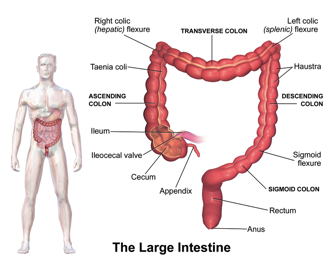
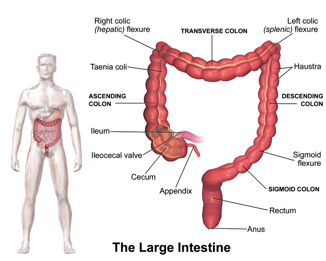
turn onto your right side for about two minutes. Then turn back onto your back. This often allows the coffee to flow into the transverse
colon and even somewhat into the ascending colon.
What
to do during your enema. Most
people remain lying on the floor or on a mat. Some people get up from the floor and lie in bed with a
towel under your mid-section to protect against leaks. However, do not walk around with the coffee inside.
This is an excellent time to do the Roy
Masters meditation exercise! You
can also rub your feet, and twist your spine. It is also an excellent time to practice deep
breathing. You can also listen to
a tape or CD, or just relax.
STEP 6. CLEANUP
Emptying
the coffee. Try to hold the
enema for at least 10 to 15 minutes.
More is even better, up to one hour. When you are ready to expel the coffee, go to the toilet and
empty out the coffee solution.
It
is okay if some water remains inside.
This usually means you are somewhat dehydrated. In this case, you need to drink more
water, or a different kind of water.
However, it is fine if no coffee comes out of you. Rubbing your abdomen and your right
calf area, while sitting on the toilet, may help eliminate the water. Please read the article entitled Water
For Drinking at www.drlwilson.com for more information about which
water to drink and how much.
A bidet toilet attachment can be wonderful to quickly and
thoroughly clean your bottom. It
costs about $30 to $50. USD and provides a spray of water on your anal area
while sitting on the toilet. It
attaches easily and uses the water supply to the toilet. It either attaches to the toilet seat,
or is a handheld sprayer unit. I
prefer the units that attach to the toilet seat. For more on this topic, read Bidet
Toilet Attachments on this website.
Washing
out the enema equipment.
Each time after you do an enema, wash the enema tube, the bag or bucket, and the enema tip thoroughly with soap and water, and hang them up to dry. It is not necessary to sterilize them.
Each time after you do an enema, wash the enema tube, the bag or bucket, and the enema tip thoroughly with soap and water, and hang them up to dry. It is not necessary to sterilize them.
Eating
after the enema. Many people
are hungry after a coffee enema. One
reason is that coffee enemas can lower the blood sugar level.
It is fine to eat
after the enema. I do not suggest
eating a lot just before doing the enema.
Wait an hour, if possible, after eating a meal before doing a coffee
enema.
Helpful hints
1. To retain the
coffee for 15 minutes requires that you relax. Make sure the room is warm, and that you are
comfortable. Wear a tee shirt,
sweat shirt or bathrobe to keep warm or cover yourself up with a blanket. Perhaps put on some quiet music,
meditate, breathe deeply, or even watch television or listen to the radio while
you are doing your retention enema.
Please do not get up and walk around.
2. To help keep the
coffee in, you may place a washrag or small towel over the anal area. Most people find this unnecessary, but
it will help if you have a weak anal sphincter.
3. If you have a lot
of money, you can buy a colonic irrigation machine, or colon hydrotherapy
machine that allows one to add coffee to an enema. Using the machine is a little cleaner because one need not
empty it into the toilet. Instead,
the enema tip on the machine is designed to allow the coffee to go in, and to
allow the coffee to be expelled all while one lies down comfortably.
4. If intestinal gas
is a problem, some stretching or bending exercises before the enema may
eliminate the gas. In particular,
lay down on your bed and pull both knees up to your chin to expel gas. You can also leave the enema tip inside
you the entire 15-30 minutes with the clamp open. This allows gas and air to
escape back into the enema bag.
The bag must be at a higher level than your body and you will need to
use a small strap around your thigh to keep the enema tube inside you so it
does not fall out.
5. If the coffee
enemas causes hypoglycemic symptoms such as dizziness, shaking or weakness, it is because a coffee enema may lower
your blood sugar. If this happens
to you, eat a little something just before or just after taking the enema. However, do not eat a lot before a
coffee enema because it will make it harder to retain the enema.
WHEN TO DO YOUR COFFEE CLEANSE
You can do a coffee
enema at any time of the day or night. If done close to bedtime, it might
interfere with sleep, due to the effect of the caffeine. However, if one feels ill during the
night with a headache, for example, you can do a coffee enema, after which some
clients report being able to sleep better through the night.
WHAT TO DO WHILE RETAINING YOUR ENEMA
A time to reflect and do the Pushing Down Mental Exercise. I strongly suggest doing the coffee
enema lying on one’s back, except perhaps for a few minutes of lying on one’s
right side to move the coffee mixture around the colon.
Lying on one’s back
for 15 to 30 minutes is the perfect time to practice the pushing down mental
exercise. Holding the coffee helps
one remain quiet enough for the meditation, and actually enhances the
meditation, as well. This is a
wise use of time and a wonderful combination of therapies.
Massaging the colon. Check the location of your colon in an
anatomy book. Rubbing the colon
area may help break up deposits of impacted feces or even colonies of yeasts or
parasites.
Red heat lamp therapy. While retaining your enema, you can
shine a red heat lamp on your abdomen.
If possible, suspend the lamp so that it is about 2 feet away and shines
down on your abdomen or chest.
HOW OFTEN TO DO A COFFEE CLEANSE?
For therapy, do an
enema at least daily, and up to about four times each day. Most everyone can
use coffee enemas daily for at least 10 years to detoxify the liver and help
heal the entire body.
Max Gerson’s protocol. Dr. Gerson,
MD, who pioneered the use of the coffee enema for cancer patients, insisted
upon the coffee enema 5 or 6 times daily, for at least two years. He also used three tablespoons of
coffee in each enema. However, I
find that today so many enemas and so much coffee is not needed or even
helpful. This is especially true
when the procedure is combined with a properly designed development program.
For most people, one to four coffee enemas daily are
excellent. If one does four daily,
I suggest doing two enemas back-to-back in the morning, and two back-to-back
again in the afternoon. This has
the most powerful effect, yet is very safe.
However, begin with no more than
4 tablespoons of coffee daily. More than this can cause nervousness in some people. Others can handle up to a total of 6 or
8 tablespoons of coffee daily.
FOR HOW LONG?
For best results, a
program of coffee enemas should be carried on for at least a year, and
preferably for much longer. Many
people have continued to take them every day for 10 years or more without any
problem whatsoever. A good friend
has used them continuously for more than 30 years as he suffers from a very
chronic arthritic condition and continues to benefit from them. Not only has he had no ill effects from
them that I can determine, but his health continues to improve.
Some health
authorities warn that coffee enemas cause dependency and can damage the
intestinal flora. However, I have
seen NO negative effects from them if they are done properly.
WHAT IF YOU ARE ILL?
In a
general book of this nature, I cannot address every situation. If you are in doubt about the wisdom of
coffee enemas consult a health professional. The next chapter discusses many cautions and
contraindications of coffee enemas.
CAUTIONS, WARNINGS AND TROUBLESHOOTING
“A 1982 study by the National Research Council (NRC) showed that
coffee enemas have the power to reduce systemic toxicity by up to 700 percent.
This is because caffeine and other beneficial compounds found in coffee -- when
not consumed by mouth and therefore diluted by the digestive tract -- work together
to stimulate the liver directly to increase production of glutathione S-transferase (GST), a powerful
detoxifying enzyme that binds with, and flushes out, toxins in the body.”
– Angela Doss
CAUTIONS
General note. Many symptoms that occur due to a coffee enema, such a
fatigue, headache, stomach ache or others are due to the release to toxins that
the body cannot get rid of fast enough.
To correct this problem, I always suggest a complete healing program
along with coffee enemas. This
includes a development diet, an excellent lifestyle, and at least basic
nutritional supplements, as discussed in the article entitled The Free Program on this website.
Also, doing a second coffee enema immediately may cause the
symptoms to go away.
Abdominal pain. Coffee enemas are very safe when done correctly. If they give you abdominal pain or
caffeine reactions, try lying on your RIGHT SIDE during your entire enema. Some clients report this works much
better. For abdominal discomfort after a coffee enema, do foot reflexology,
especially of the top of the toes on the left foot.
Allergic reaction to coffee. If you are sensitive to drinking
coffee, often you can do coffee enemas, as it is not the same as drinking coffee. Very rarely, someone is sensitive to
the coffee in the enema. Try using
less coffee, or you may be reacting to a little mold in the coffee. In this case one may do better with
bulletproof coffee (www.bulletproofexec.com/coffee/). I do not like the lightly roasted SA
Wilson Enema Coffee as much, because it is quite yin in Chinese medical
terminology.
Anal strictures. Coffee enemas are excellent provided the coffee will
flow into the colon.
Appendicitis. I do not suggest coffee enemas if a person has lower
right quadrant abdominal pain.
Babies. I do not have experience administering coffee enemas to
babies. However, Max Gerson, MD describes a case of cancer in an 8-month-old
baby who underwent his entire treatment, including coffee enemas. There was no problem with the enemas in
the baby. (for enemas with children, see Children
below).
Bowel
movements. It is perfectly okay if you have no bowel movements when
doing coffee enemas. This is not
due to weakening the colon muscles.
Usually, the reason for no bowel movements is that you are cleaning out
the colon daily, so there is no feces left inside to come out with regular
bowel movements. In most cases,
bowel movements will return on their own, even while you are doing coffee
enemas, as colon health improves.
Breastfeeding. Coffee enemas while breastfeeding appear to be perfectly
safe.
Children. Coffee enemas can be done with children age 3 or
older. Use half the amount of
coffee and water or less for a child.
Some children happily lie down on the floor and can do the enema exactly
the same way as adults. Other
younger children prefer to lie on their stomach on a bed, and a parent
or helper inserts the coffee into the rectum and places a towel over the rectum
to hold it in. Another towel or a
bed pan can be placed underneath the child to catch any leaks. Use plenty of Vaseline or shaving cream
on the enema tip to make it slide in easily. Children who do coffee enemas are able to use an adult sized
enema tip, in my experience.
Colitis and Crohn’s
Disease. This is not a
contraindication for coffee enemas.
Colon or rectal cancer. Caution is required in case the
colon is damaged, which could cause perforation. However, coffee enemas are extremely helpful for most
cancers. I suggest two to four
coffee enemas daily for cancers.
Constipation. Coffee enemas are excellent to help clean out the colon
and restore its integrity.
However, also look for other causes of constipation. Common causes are not drinking about 96
ounces of water for an adult, drinking the wrong type of water, and an improper
diet that does not contain enough cooked vegetables. Some people also need more magnesium.
Danger signals during a coffee enema. Expel the coffee at once if the
pressure to release the enema becomes severe. I have never heard of anyone who ruptured the colon with a
coffee enema.
Ralph Moss reported
that the US Office of Technology Assessment or OTA "cites the case of the
two Seattle women who died following excessive enema use. Their deaths were attributed to fluid
and electrolyte abnormalities. One
took 10 to 12 coffee enemas in a single night and then continued at a rate of
one per hour. OTA pointed out, “in
both cases, the enemas were taken much more frequently than is recommended in
the Gerson treatment."
Dangers of mineral depletion or mineral
imbalances. In my experience,
these do not occur. In fact,
coffee provides more minerals. To
be sure, drink only spring water before and after your enema and take 3 to
6 600 mg capsules of kelp daily.
Diarrhea. Coffee enemas can be done when
one has diarrhea, and may help correct it, depending on the cause.
Diverticulosis and diverticulitis. Coffee enemas are excellent to help
clean out diverticuli in the colon.
Fecal incontinence. Coffee enemas are excellent. However, to retain the enema, one must
place a washcloth over the anal area.
Fatigue. Some people
report feeling very tired after a coffee enema. This is normal for some people, and is not a problem. If this occurs, rest after your enema,
and you may do the enema before going to sleep in the evening so you can sleep
afterwards.
Fissures and fistulas. These are best
resolved before doing coffee enemas.
See the article on this website entitled Anal
Fissures And Fistulas.
Food poisoning. Coffee enemas are excellent to help relieve many cases
of food poisoning.
Gas and bloating. Coffee enemas are fine, and often helpful. If
the enemas cause gas or bloating, rub the feet after the enema, especially the
top of the left foot near the toes, as this may help relax the intestinal
tract. Address other causes for
gas, such as too many food combinations, eating too much, improper diet, or a
need for a digestive enzyme.
Gastritis and ulcers. Coffee enemas are fine.
Gastrointestinal bleeding. This depends on the cause. However, the enemas are usually safe if
done carefully.
Hemorrhoids. Mild hemorrhoids usually do
not interfere with coffee enemas. More
severe hemorrhoids can bleed and be painful, and may make coffee enemas
difficult to do. In severe cases,
one must first resolve the hemorrhoids with surgery or preferably galvanic
treatments before one can do coffee enemas.
Irritable bowel syndrome. Coffee enemas can be done when one
has irritable bowel syndrome.
Improper diet is the most common cause of irritable bowel syndrome.
Malabsorption syndromes, including celiac disease. Coffee enemas are usually helpful
to improve intestinal health.
Meals.
I suggest waiting at least one hour after a meal before doing a
coffee enema. After an enema, one
can eat a meal immediately.
Medications. Coffee enemas will not
interfere with any drug therapies that I know of. Consult your doctor if you are unsure. Coffee can antidote homeopathic
remedies.
Menstruation. This should not interfere with coffee enemas in any way.
Nausea and vomiting. Coffee enemas are often excellent to
reduce nausea and vomiting. In
fact, coffee enemas are superb for nausea, which is often due to liver
toxicity.
Overdoing coffee enemas. It is possible to overdo on coffee
enemas. Do a maximum of 4 enemas
per day. Coffee enemas are a
powerful detoxification procedure.
Parasites and yeast. Coffee
enemas are excellent to help expel parasites. This can occur due to mechanical cleansing of the colon, and
due to increased bile flow.
Pregnancy. Coffee enemas appear to be completely safe during
pregnancy, when done properly.
Rectal Abscess. In general, coffee enemas are very good.
Rectal prolapse. I suggest avoiding coffee enemas until
the prolapse is corrected.
Stimulation. If a person
feels very stimulated after a coffee enema, the reason is that too much coffee
was used. Some types of coffee
have more caffeine than others.
Also, some coffee may contain some mold that may be stimulating.
Dr. Max Gerson, MD used up to 18
tablespoons of coffee per day (in 6 coffee enemas), but I find this is too much
for most people. Most people
cannot handle more than about 8 tablespoons of coffee (in about 4 enemas) or
less today. I believe this is due
to changes in the bodies over the past 80 years of so, when Dr. Gerson did his work.
The elderly. So far, I have seen no problems administering coffee
enemas to people in their 80s or even 90s.
Trouble
inserting the enema tip. Lubricate the tip
well. Twist the enema tip
as you insert it, as this can make it slide in much easier.
TROUBLESHOOTING
1. The enema bucket or enema bag is too high. If the enema bucket or bag is hanging
too high, the coffee solution will flow into your colon too quickly and you may
not be able to hold it. It will go
in, but then it may come back out, making a mess.
2. The enema bucket or bag is too low. The enema bag or bucket needs to be at least 2 1/2 feet
above your body or the water wont flow in.
3. The coffee is too cold or too hot. If the coffee is not around body temperature, it will be
hard to keep the coffee inside.
4. The tube or enema tip is not in far enough. If this happens, the coffee won’t go
inside and it will be a mess.
Insert the tube or tip at least 3 inches.
5. You are not relaxed enough. If you are tense, you may not be
able to hold the coffee as well.
Use your breath to relax your body.
6. The tube is not fastened securely to the bucket or bag. If you ignore this, it will cause a
mess.
7. Trouble holding the enema.
You may have some intestinal gas. Before doing your enema, try to expel the gas. One way to do this is to bend over at
the waist or do some stretches to expel gas.
If the problem continues, leave the
enema tip inside you with the clamp open during the entire time. This allows air and gas to escape back
into the bag or bucket. The bag or
bucket must be at a higher level than your body for this to work.
It may help to place a small pillow or
rolled up towel under your buttocks so the water flows down hill into your
colon.
If you lie on a bed or mat for your
enema, another way to encourage the water and coffee to stay inside is to
elevate the foot of the bed slightly with bed risers.
Be sure to breathe deeply and relax
when a cramp comes. Occasional
cramping is normal as the body moves bile, feces and toxins out of the liver
and small intestine areas.
At times, using less water and/or less
coffee will make the enema easier to retain. Or try the upgraded coffee. Be patient and experiment a little. Usually, the problem will subside with these
suggestions.
8.
Pain or discomfort in your abdomen after a coffee enema. Do reflexology on
yourself. For some reason, you
must rub the tops of the toes of the left foot. Usually this will relieve any discomfort.
9.
Irritation of the anal area. Use
more lubricant. If that doesn’t
work try adding one or two tablespoons of aloe vera
juice to the coffee liquid.
10. Coffee intolerance.
Occasionally, a person cannot tolerate even a small amount of
coffee. This can be due to:
a. Sensitivity to
caffeine. In this case, try lying
on your right side. If this does
not work, begin with just a pinch of coffee and work up slowly as you can.
b. Rarely, a person cannot
tolerate any caffeine at all, and cannot do coffee enemas for this reason. I do not recommend using decaffeinated
coffee, because it is not that effective.
c. Sensitivity to mold on the
coffee beans. If this is the case,
switch to “upgraded coffee”.
d. Sensitivity to roasting
chemicals. In this case, you will
do better with a lighter roast coffee.
e. Sensitivity to rancid oils
in the coffee. In this case,
switch to a less oily coffee.
CONTROVERSY AND MYTHS ABOUT COFFEE ENEMAS
"In fact, there is hardly a
region of the world where people did not discover or adapt the enema. It is
more ubiquitous than the wheel.
Enemas are found in world literature from Aristophanes to Shakespeare,
Gulliver Travels to Peyton Place."
- Ralph W. Moss, PhD
MYTH #1. COFFEE
DAMAGES THE FLORA IN THE COLON.
No. In my experience of
over 33 years, daily coffee enemas, even several per day, does not affect the
flora in the colon in a negative way.
It does not wash out the flora because the enema does not involve that
much water. In fact, as mentioned
earlier in this book, coffee enemas often improve the intestinal flora and help
get rid of intestinal dysbiosis.
MYTH #2.
COFFEE ENEMAS WASH MINERALS OUT OF THE BODY. No. In fact coffee
enemas add minerals to the body.
Coffee contains many minerals, including zinc, selenium, potassium and
others.
MYTH #3.
COFFEE ENEMAS CAUSE CONSTIPATION (FLACCID BOWEL). No. If one stops coffee enemas, it may take the body several
days to a week to readjust.
However, I have not seen coffee enemas cause constipation. In fact, by helping to heal the colon,
coffee enemas can reduce constipation.
MYTH #4.
COFFEE ENEMAS CAUSE ADDICTION.
Very rarely. I have only
seen one case in which a person developed an addiction to coffee by mouth and
enemas. More often, a person
enjoys the coffee enemas, and wants to continue them. This is not an addiction, however.
MYTH #5.
COFFEE ENEMAS CAN PERFORATE THE COLON. I have never heard of this occurring.
MYTH #6.
COFFEE ENEMAS CAN CAUSE INFECTIONS. While this is conceivable, I have never heard of it
happening. Just be sure the enema
bag and tubing are clean. It is
not necessary to sterilize them.
MYTH #7. THE
CAFFEINE IS HARMFUL. Less caffeine is absorbed from coffee when taken
rectally. If a coffee enema causes
a caffeine “buzz”, I suggest using less coffee. Decaffeinated coffee does not work well in coffee enemas.
MYTH #8. DO COFFEE ENEMAS CAUSE DEHYDRATION? You can read on the internet that this
is true. However, that is not my
experience at all. In fact, many
people improve their hydration by doing coffee enemas. The water is absorbed, and this is a
benefit.
A few people report that after they do a coffee enema, their
lips are dry and a little sore.
They may falsely believe that this means the coffee enema caused
dehydration. My experience is that
these people were already dehydrated, or this symptom would not occur. Either they were not drinking enough
water (about 3 quarts or 3 liters daily for an adult), or their drinking water
is not hydrating them well, or they are on the “dehydration diet”. This consists of having any amount of
caffeine, alcohol or sugars in the diet, including fruit or sweet juice. One cup of coffee or tea is usually
okay, but not more.
A TOTAL HEALING PROGRAM WITH COFFEE CLEANSES
“When a
comparable amount of caffeine was administered, the amount (and AUC ) of caffeine obtained from the coffee enema were about
3.5 times significantly less than those of the coffee consumed orally, despite
having slightly but statistically faster.
In addition, a
single administration of the coffee enema or the oral coffee consumption did
not adversely affect systolic and diastolic blood pressure and heart rate.” -
Pharmacokinetics of Caffeine following a Single Administration of Coffee Enema
versus Oral Coffee Consumption in Healthy Male Subjects
I find that just doing coffee enemas, without following a
total health program, may not work well.
This may be because the coffee enemas cause deep changes in body
chemistry and the support of a total program is needed to reap the full
benefits of the coffee enemas.
Those who just do coffee enemas, but continue with
unhealthful lifestyles and poor quality diets, at times develop headaches,
abdominal upset, anxiety or other symptoms. This is unfortunate because when this occurs a person
usually decides that coffee enemas are “toxic”, or otherwise harmful. To avoid this, I suggest a more
comprehensive healing program when one does coffee enemas. There are several ways to do this:
1. A complete
development program. This is the best. To do this, one needs to contact one of
the Approved Practitioners listed on this website by clicking here.
2. The ‘free
development program’. This is an abridged and introductory
development program. It is found
in the article on this website entitled The
Healing Lifestyle.
3. Below is a
shorter summary of the Healing Lifestyle
article. This can help one get started quickly.
I do not recommend other natural healing programs such as chelation, bio-identical hormone therapy, most herbal therapies, homeopathy
or other diets or programs. I do
not think they are nearly as safe, even if they seem to give good results.
GENERAL DIETARY SUGGESTIONS
1. Eat at least 2 cups, and preferably 3 cups of cooked
vegetables at each meal, at least three times daily. This means 6-9 cups of cooked vegetables daily. The vegetables should be cooked until
soft, NOT RAW. You will obtain
many more minerals from cooked vegetables than from raw ones, cooking kills
bacteria on vegetables, and the losses due to proper cooking are minimal. Do not eat many salads for this
reason. Each day, eat at least:
a) two root
vegetables, such as carrots, turnips, rutabaga, daikon,
sweet potato, yams, or onions.
b) two
cruciferous vegetables, such as cauliflower, cabbage, brussels
sprouts, or cauliflower.
c) two greens, such as spinach, kale,
carrot tops, cilantro, mustard greens, Chinese cabbage, bok
choy or Swiss chard.
2. With your cooked vegetables, eat ONE protein OR ONE
starch at a meal. In other words,
do not mix meat and eggs at one meal, as these are both proteins. Also, do not mix rice and corn tortillas,
for example, at the same meal, as these are both starches. Also, preferably do not mix a starch
with a protein.
The reason for simple meals is to ease digestion. It is fine to have 4 or even 5 meals
daily. However, do not just graze
or snack all day. Have sit-down,
relaxed meals.
For example, you may have a cooked vegetable or two with a
chicken thigh or two. Then, a few
hours later, have a cooked vegetable or two with a starch such as brown rice,
corn tortillas or quinoa. These
are simple food combinations and much easier to digest. You may also have just a cooked
vegetable meal, for example, or just some lamb chops. Eating only one food per meal is even easier to digest, and
usually best, although some people find it boring. Babies and young children usually prefer to eat this way, as
do many so-called primitive people, as it works very well. it is especially recommended if your
digestion is weak.
Vegetables to avoid. Avoid the
nightshade vegetables, which are too yin and slightly toxic for regular
consumption. They include
tomatoes, white and red potatoes, eggplant and all peppers, such as sweet and
hot peppers, and table pepper, which is usually rancid. A little cayenne pepper as a spice is
fine, but avoid very hot spicy food.
Others to minimize or avoid include zucchini, summer
squashes, okra, asparagus, artichokes, mushrooms, celery and cucumbers. These are all too yin or a bit
toxic. Celery is fair, and once in
a while is fine, but not daily. It
is slightly toxic. Otherwise, the
vegetables, always cooked, are superb foods.
Remember to cook your vegetables always. I know many health authorities
recommend raw vegetables. However,
I find that people do not absorb enough minerals from raw foods, including
salads. Also, raw vegetables are
too yin, and in restaurants they are often unclean. You can have a cooked vegetable salad if you prefer, but not
a raw salad. To read more, read
Raw Food on this website.
BEVERAGES
Plain water should be your main beverage. Finding healthful water to drink is
extremely important, in our experience.
Spring water that is bought in plastic bottles or delivered to your home
is fine. An alternative is to go
to WWW.FINDASPRING.COM to perhaps find a spring near you where you can fill up
your own water jugs. Spring water
provides many minerals the body needs and it is untampered
with.
If you cannot afford spring water, the next best water is
usually carbon-filtered tap water.
Do not use fancy multi-stage water filters. Use a carbon filter only. The others may clean up the water, but they appear to damage
it as well.
Besides pure water, only mild teas hydrate the body
perfectly. These include black or
green tea, chamomile, hibiscus, mint, strawberry leaf and other mild herbal
blends. Please do not add
sweeteners to them, if at all possible.
Almost all adults need to drink three (3) quarts of water
each and every day. An excellent
habit is to drink up to 1 quart of healthful spring water upon arising in the
morning.
Avoid all reverse osmosis water, such as “purified water”,
“drinking waters”, and others. RO
does not hydrate the body as well, and is devoid of minerals and very yin. Avoid water machines such as alkaline
water machines. Read Water For
Drinking on this website for much more on water.
Also avoid alkaline water, and almost all “designer” or
fancy waters sold in health food stores and elsewhere. Too often, these are made with reverse
osmosis water or other types of water that do not hydrate the body as well.
Avoid adding minerals to your water. In all cases, so far, this detracts
from the overall quality of the water because water is a type of living
food. Randomly adding minerals to
it damages the quality of the water, which is extremely complex.
Herbs and condiments. Use sea salt with your cooking. However, do not drink water with sea salt in it. Strictly avoid table salt, a very poor
quality product.
Mustard is an excellent spice that can be added to many
dishes. Other good spices are
cumin, turmeric, garlic, dill, rosemary, thyme, oregano, curry powder and other
mild herbs.
Avoid or use sparingly all medicinal herbs, especially
those imported from Asia or Latin America. Sadly, today we find that all the Ayurvedic
and Chinese herbs usually contain toxic metals in excessive amounts. Most herbal programs are not compatible
with development. I will suggest
herbs that are safe if you embark on a complete development program.
FOOD SUPPLEMENTS
Several food supplements are excellent for everyone
today. These are all the
supplements that I suggest unless you decide to send in a hair sample to begin
a complete development program:
1. TMG or trimethylglycine. Adults may take up to 3000 mg
daily. Children need less,
depending on their size and weight.
This supplement helps with toxic metal removal and many other body
functions.
2. Kelp capsules.
For adults: between three and six
660 mg capsules of kelp daily, but ONLY from Nature’s Way, Solaray or the other brands mentioned in the article
entitled Kelp at www.drlwilson.com.
Instead of capsules, one may take about a tablespoon of kelp granules
from Frontier Herbs or Monterrey Bay Herbs.
3. Omega-3 fatty acids. These are critical for health. Most people do not get enough. Adults need about 900 mg daily.
Children need a little less. I
suggest 3 to 4 cans of sardines per week or an omega-3 supplement from fish
oil. Cod liver oil or fermented
butter oil do not work as well.
Krill oil is somewhat toxic and not recommended.
4. Vitamin D3, 5000 iu daily as a
supplement. Most every adult needs
this much. Children need a little
less.
5. Calcium, magnesium and zinc. Most adults need about 750 mg of a quality calcium, 450 mg
of a quality magnesium, and about 20mg of a good zinc supplement. The minerals should be in the form of chelates, lactates, citrates or gluconates.
6. A powerful digestive aid. It should ideally contain ox bile and pancreatin. This is the most yang and usually the
most powerful, as well.
7. If you can afford it, take several dried vegetable
capsules daily. This is better than a green superfood
powder, as the powders oxidize and go rancid quickly.
A good and inexpensive brand of supplements in the
supermarket or drugstore is NatureMade. They usually work very well. Stay away from most other brands in
stores because we find that some do not work as well, no matter how expensive
they are.
OTHER HEALING FACTORS - LIFESTYLE
1. Reduce stress wherever you can by living simply and
inexpensively. Also, do your best
to live and work in a safe location with clean air, peace and quiet.
2. More rest is critical for most people. Do your best to get 9-10 or more hours
of sleep every night. Also,
getting to sleep early, between 8 and 9 PM, will give you the most restful
night’s sleep. Naps are excellent
during the day and may also be needed, as you may feel tired, at times, as
healing occurs.
3. Limit your exercise to gentle walking, hiking, bicycling
or perhaps swimming in lakes, oceans or rivers but not pools, preferably, due
to toxic chemicals and infections.
Although some health authorities disagree, I find it is not necessary to
exercise vigorously. Most people
are exhausted, and very unhealthy.
As a result, vigorous exercise may feel good, but just stresses the body
and is not a good idea.
4. Deep breathing every day for at least 15-30 minutes is
also excellent.
5. Minimize sexual fluid loss. This means try not to ejaculate, men, and for women it means
to limit orgasms and sexual fluid loss.
Regular sex once a week is plenty.
6. Reduce toxic exposures. Reduce all chemicals on your skin such as perfumes, cologne,
lotions, etc. Also beware of lawn
chemicals, pesticides, solvents, paints, and other toxins. Use only natural products with as few
chemicals in them as possible.
7. If you have silver amalgam dental fillings, begin now to
have them replaced with either composite fillings or gold alloy. The silver amalgams contain mercury
that is extremely toxic.
Root canal-filled teeth almost always harbor serious
infection, even if you cannot feel it.
Most of the time, it is best to have the tooth removed. This can be extremely important in order
to regain and maintain your health.
Also, do not get fluoride treatments and do not get metal
braces on your teeth. The metal
usually contains nickel, a potent toxin.
8. Minimize electromagnetic pollution. If you must use a
cell or portable phone, hold it away from your head or use a headset or
speakerphone. Turn off all
electrical devices when you sleep.
Keep computers, televisions and phones as far away from you as possible.
9. Minimize, and preferably avoid all medical and
over-the-counter drugs.
THE PROCEDURES
1. Carrot Juice daily. Every adult
needs to drink about 10-12 ounces of carrot juice daily, preferably away from a
meal. If possible, wait 15 minutes
after drinking it before eating a meal.
One or two ounces of wheat grass juice is also fine as a substitute, but
not all the time.
Use a juicer, and not a blender such as the Vitamix or others.
Blenders do not break up the carrots enough to extract all the
nutrients. They also mix the juice with too much water and air, which is not
desirable. Also, they leave the
pulp intact, which is not desirable in this case.
Try to have your carrot juice alone, rather than with any
other food or beverage. Those with
yeast problems or sugar sensitivity may not tolerate carrot juice well. In this case, drink one half or
one-third of your juice, put the rest in the refrigerator and drink more of it
every few hours. This avoids
putting a lot of sugar into your blood stream at one time. Be sure your juice is fairly
fresh. If store-bought juice does
not taste good, it may be moldy or have pesticides in it.
2. Daily near infrared light sauna therapy. This is a
fabulous, inexpensive and safe healing and detoxification procedure. It often greatly speeds up
healing. With regular use, it
allows the body to eliminate hundreds of toxic chemicals and two dozen toxic
metals in a few years that would otherwise take much longer.
3. The daily spinal twist. This simple
exercise will help keep your spine in alignment.
Lie down on your back with your legs straight, feet
together but not crossed, and your arms stretched out to the sides. First gently and slowly turn your head
from left to right, several times.
This, alone, will help adjust your neck and upper back. If you can do it gently, move your head
as far to the right and to the left as you can. Always do it slowly, however, and never force anything.
Part II. This
is for your mid and lower back, an area that most people have difficulty
with. Lying down straight on a bed
or floor, with your arms out to the sides, lift your left leg straight up in
the air and gently swing it to your right over the other leg so it twists your
spine to the right. Stay here for
a few breaths and slowly release.
Repeat on the other side. This exercise stretches, aligns and helps
energy flow through the spine.
4. Foot reflexology. This is a
simple, inexpensive, safe, and very powerful procedure that anyone can do at
home. It will balance the channel
system of the body and by so doing help release toxins, help relax the body,
and improve many types of symptoms.
I suggest doing it in the morning and at night before bed.
Also, pull each toe downward and then twist each toe back
and forth a few times. Many times,
they will pop or snap, which is good.
Ten minutes for each foot is sufficient in most cases. More information and a map of the foot
reflexes are available in an article on reflexology at www.drlwilson.com.
THERAPIES RELATED TO COFFEE ENEMAS
THE VAGINAL COFFEE IMPLANT
I know it sounds odd, but this is very helpful for many
women. It consists of placing a
small amount of a coffee solution inside the vagina, usually on a small sponge,
and retaining it for about 30 minutes.
It is actually quite simple and clean, and in fact it is easier than a
coffee enema. It is not a
replacement for coffee enemas, but women report it is a wonderful
procedure. It is also helpful for
women who have experienced rape.
This newer procedure is part of development programs. For a complete article about this
procedure, please read The Vaginal Coffee Implant
on this site.
THE PENIS COFFEE IMPLANT
This may sound odd, but a coffee solution in contact with
the penis and testis is helpful for many men. It can help with infections, and general health. To read about it, please read Penis Coffee Implants on this site.
COFFEE APPLIED TO AN EAR, SINUS OR HELD IN THE MOUTH
Coffee can also be used therapeutically for other
situations. For example:
- A few clients
have placed a small amount of coffee in an ear to help relieve an ear
infection.
- A few
clients have placed a small amount of coffee in a netti
pot and used this to insert the coffee into the nasal passages and sinuses.
- A few
clients have held half a cup of coffee or less in their mouth for about 15
minutes, in order to all the coffee to make contact with the teeth, gums and
other structures in the mouth.
At this time,
these are research projects. I
welcome feedback from anyone who has done research on these therapeutic uses of
coffee.
THE OZONE COFFEE ENEMA
This is a newer procedure that appears
to be an excellent enhancement of the basic coffee enema.
Required
Materials: An ozone generator.
Two types are:
1.
Buy a hot tub ozonator. These cost about $125.00-$150.00 in the USA for a small one,
which should be adequate. These
have a small tube coming out of them through which the ozone flows.
OR
2. Buy The Big Pitcher for $200.00 US at https://www.amazon.com/The-Big-Pitcher-Water-Oxygenator/dp/B0071NV986?ie=UTF8&SubscriptionId=AKIAJO7E5OLQ67NVPFZA&ascsubtag=516338755-24-1495269067.1470193729&camp=2025&creative=165953&creativeASIN=B0071NV986&linkCode=xm2&tag=shopperz_origin2-20. It is a water pitcher that sits on a
base that is an ozone generator.
The
procedure:
1. Make enema coffee using about half
as much water as you will end up with.
For example, if you want to end up with 2 cups of water in your enema,
which is standard, then boil the coffee using about 1 cup of water.
2. Once the coffee has cooked for 12 or
13 minutes, take if off the stove.
However, instead of adding another cup of room temperature water to the
coffee to cool it down, add water that you have ozonated
(see below how to do this.)
3. Do your enema as described in the
procedure section of this article.
How
to ozonate water.
If
you are using a hot tub ozonator, or something
similar, pour a cup of water into a glass. Put the ozone output tube of the ozone generator into the
water and leave it for 20 minutes.
This will ozonate the water.
If
you have a Big Pitcher, pour a cup of water into the Pitcher. Plug in the base (the ozonator), and leave it for 20 minutes. The ozone bubbles through the water and
ozonates it.
Warning.
Do not boil the coffee with ozonated water.
The ozone will be dissipated by the heat of the stove. Use regular water to cook the coffee
and then add ozonated water when the coffee is ready.
RECTAL OZONE AFTER A COFFEE ENEMA
This is a powerful and excellent
procedure, but only do it a few times weekly, and only for a few minutes. It is particularly useful if one has
cancer anywhere in the body.
Materials
required:
1. An ozone generator. I believe a simple hot tub ozonator will be adequate. Some doctors prefer a very expensive unit that includes an
oxygen bottle, but I do not think this is necessary.
2. You must either attach a standard
enema tip to the output tube of the ozone generator
OR you must smooth and round the sharp edges of the end of
the ozone output tube so it can be safely inserted in the rectum. To do this, heat the end of the tube a
little on a burner on your stove.
This will melt the plastic at the end of the tube, and will round the
sharp edges.
The
procedure:
1. First do a standard coffee enema.
2. When you have expelled the coffee,
put the output tube of the ozone generator into the rectum.
3. Turn on the ozone generator for
about 5-10 minutes. Do not do it
for longer, as it is somewhat irritating to the colon. You can do this procedure up to three
times per week safely. If you are
very sensitive to the ozone, pull the ozone tube out sooner.
GARLIC ENEMAS
In some cases, we have found garlic
enemas useful to help reduce infection.
Procedure. Peel 8 to 10 medium-sized cloves of
garlic. Chop them up finely. Then place them in one quart of water. The best water is spring or distilled
water, or carbon-filtered tap water.
Cover the pot, bring the water to a
boil, and then let the garlic simmer on a low flame for 15 minutes. Then remove the pot from the
stove. Let it cool until you can
place a finger in the water comfortably.
Strain the liquid through a fine strainer or coffee filter paper, and
place it in an enema bag or enema bucket.
Once you put the coffee into the rectum, retain it for 15 minutes or a
little longer, if possible.
Cautions.
1.
This is not for everyone. It
is only for those with serious infection problems.
2.
Do not use this type of enema more than twice a week. The reason is that it is a more yin
procedure, which is not as good on a daily basis.
3.
Do not combine garlic with coffee in a single enema. Neither works as well this way. Do them separately, on different days,
ideally.
ENEMAS WITH OTHER SUBSTANCES
Clients occasionally report they are
doing enemas with aloe juice, berberine, acacia, Cantron, colloidal silver or other substances. These could definitely be harmful, and
I never recommend any of these substances in an enema. They are not the same as a coffee
enema, no matter what anyone claims.
COLONIC
IRRIGATION
This is a related form of colon hydrotherapy. Colonic irrigation or high colonics
used to be administered in hospitals before childbirth, before surgery, and in
other situations. Here are some of
the differences between colonic irrigation and coffee enemas:
1. The amount of water used. Colonic irrigation involves placing several gallons or more
of filtered water in the colon and massaging the colon to loosen impacted fecal
material. Then one empties the
water and repeats the procedure a number of times, usually for about an hour.
2. Requires a professional in most cases. Colonic irrigation generally requires a
trained colon hydrotherapist. However, one can do colonics at home,
by oneself, if one has the correct equipment.
3. The cost. A
professional colonic irrigation session usually costs $60-100.00.
In contrast, a typical coffee enema involves two to four
cups of water, is done at home, is very low cost, takes only about 15 to 20
minutes, and does not require a skilled practitioner.
Advantages of colonic irrigation is that it may clean out an
impacted colon and parasitic infestation much faster, since much more water is
used. Results can be
dramatic! This is extremely helpful
when the colon is very diseased or constipation is longstanding, but
only for a series of 5 to 10 of them – no more.
A major disadvantages of colonic irrigation is that repeated
sessions make the body too yin in
Chinese medical terms, by introducing too much water into the colon. For this
reason, I do not recommend colonic irrigation very often.
Coffee enemas do not pose this problem, in my experience,
and can be repeated several times daily for years without any adverse effects.
HERBS AND SUPPOSITORIES FOR THE COLON AND THE LIVER
Some
clients want to take various herbs instead of doing coffee enemas. The use of herbs such as milk thistle
and dandelion is good. However,
they do not have the same effects as coffee enemas and they are not a
substitute. At times, I recommend
both coffee enemas and milk thistle and dandelion for the liver.
Some
clients also ask about the use of coffee suppositories instead of coffee
enemas. The suppositories do not
work well, in my experience. I
would not bother with them at all.
THE COLON AND ITS PATHOLOGIES
ANATOMY AND PHYSIOLOGY OF THE COLON
The colon is also
called the large intestine. It is located in the lower
abdomen. The colon is a tube about
2 feet long that is shaped like an upside down U, as shown in the diagram
below. It is built in segments
that look something like little pouches.
The colon has a number of layers beginning with an inner
mucosal lining. Outside of this is
a layer of muscles that contract in a sequential or orderly fashion, one
segment after the other, to move the food and feces along its length. This process is called peristalisis.
There is also an outer covering on the colon, and the
entire structure is suspended in the abdomen by various ligaments. It has a rich blood supply, and blood
vessels from the colon go directly to the liver, and not into the general blood
circulation.
The colon also
has some lymphatic tissue that drains certain poisons from the colon.
Functions of the colon. These are:
1. It
removes water and nutrients from the chyme, which is the semi-liquid mass of partially digested
food that enters the colon.
2. It
absorbs thiamine (B1), riboflavin (B2), cobalamin
(B12), vitamin K and other vitamins that are made by the bacteria that live in
the colon.
3. The colon
is also a complex eliminative organ that prepares the non-nutritive part of the
chyme for elimination.
4. The colon
also protects the body from deadly poisons that may be produced in the
intestines.
CAUSES FOR
COLON DISEASES
The colon is
one of the most diseased organs of the body in many people today. Everyone needs to pay attention to this. The reasons are quite simple, and
include:
1. Eating sweets, including all sugars, fruits and
juices. These often feed yeasts
and other pathological organisms.
2. Eating poor quality food, low in fiber and foods
containing additives, preservatives, pesticides, and other chemicals that
damage the intestines.
3. Improper eating habits such as eating on the run or too
fast, eating in the car or not chewing thoroughly.
4. Low levels of digestive enzymes in the upper
intestines. These cause partially
digested proteins and starches to end up in the colon, where they either rot or
ferment. This causes the
production of extremely toxic chemicals such as skatol,
indol, cadaverine and
others. Most people know about
these from their foul odors, gas and bloating, all of which is harmful.
5. Any use of antibiotics. These damage and often destroy the normal flora in the
colon.
6. Use of many other medical drugs and over-the-counter
remedies. Most of them are toxic
to the intestinal tract to some degree.
7. Ignoring the call of nature to empty the bowels.
8. Hurried lifestyles, with fear and nervous tension. These negative emotions often affect
the functioning of the colon.
9. Infections in the colon. Common ones include yeasts, parasites, bacteria and viruses.
10. Fruit-eating and sugar-eating are among the most
important causes of colon problems today because it allows and encourages the
growth of yeasts in the intestines. Also, fruit is extremely yin and this tends
to expand the colon and slows its activity.
COMMON DISEASES
OF THE COLON
1. Colitis. This means inflammation of
the colon. There are many kinds
such as ulcerative colitis, Crohn’s disease, and
mucus colitis. Diet and having the
correct flora in the intestines are important to heal this condition. Drugs and surgery are not necessary if
one follows a development program.
2. Irritable
bowel syndrome. In this condition a person experiences
alternating constipation and diarrhea.
Pain or tenderness in the colon is also common. Correcting the diet and lifestyle
usually takes care of this condition.
3.
Diverticulitis. This is an inflammation and perhaps
infection in one or more pockets that form in the large intestine. It usually goes away as the colon
heals.
4. Bowel
Obstruction. This is a very serious condition that
usually requires surgery to remove the obstruction. It may be caused by a tumor or twisting of the intestine.
5. Prolapsed
colon. In this condition, the transverse colon
elongates and hangs down. This
often is associated with constipation and other problems such as yeast or
parasites in the colon.
6.
Constipation. This is the most common problem in the
colon and one of the most common conditions in the world. I find that correcting the diet and
drinking enough pure spring water usually ends this problem. Adults generally need about 2 to 3
quarts of pure water daily.
7. Diarrhea. This occurs when food moves through the colon too fast. It is a common condition with a number
of causes. One cause is an intestinal
infection. Amazingly, many cases
of chronic and long-standing, diarrhea clears up when a person eliminates all
wheat, fruit, and all sweets from the diet. One must also eat at least 3 cups of cooked, not raw,
vegetables each day.
8. Cancer of
the colon. This is a common form of cancer. I believe that most of it is easy to
prevent by improving the diet and by using coffee enemas regularly.
9. Fissures and
fistulas. Fissures are small tears in the skin or
mucosa in the anal area. An
infection in the area is usually present.
These are fairly common and make taking coffee enemas difficult. They can usually be healed by a daily sitz bath with hot water and several cups of Epson
salts.
Fistulas are less
common and are openings between the colon and usually the vagina or some other
structure such as the bladder.
They may heal themselves, or may require a surgical repair.
10.
Strictures. This is a narrowing of a part
of the colon, often due to adhesions, scarring or copper toxicity. Strictures may interfere with bowel
movements, and with coffee enemas.
11.
Hemorrhoids. These are dilated blood vessels that
surround the anal area. They are
very common and may bleed during bowel movements. If they are small, a development program will usually cause
them to heal. If they are very
large, doing coffee enemas is difficult.
In these cases, laser surgery or galvanic treatment may be very helpful.
DETOXIFICATION
PRINCIPLES OF DETOXIFICATION
1. It takes loads of energy to detoxify the body.
2. Deep detoxification is not a fast process, no matter
what anyone claims. It is quite
involved and cannot occur haphazardly.
Many people claim they “got rid of their mercury”, for example, with chelation or a special diet. I would say they got rid of a little mercury with these
methods because it often shows up later on hair mineral tests, indicating it
was not removed very deeply.
3. Detoxify now, while you are young, even if your 70. This is because as a person grows
older, the amount of etheric or life energy
diminishes. As a result, as we
age, there is less energy available for healing so it is harder to get well.
4. Use as many methods of detoxification as you can at one
time, provided they are integrated.
However, in many cases, the methods of detoxification conflict with each
other and this negates some or all of their benefits.
5. Make the body more yang. This, in itself, is a powerful detoxification method today
for most people because their bodies are too yin. The yang method of toxin removal is to contract the body,
which literally squeezes out poisons.
It is like ringing out your clothes to remove the water and soap.
6. Let go of negative thoughts and emotions such as fear,
guilt, anger and victim hood. If
you do not do this, you will tend to hold on to certain toxins in the
body. For example, iron toxicity
is associated with anger. As you
let go of your anger and forgive people, it will help the body to remove toxic
forms of iron. In this way, there
is a close connection or correlation between emotions, thoughts, and toxic
metals in the body.
7. Opening channels and meridians helps
detoxification. This has more to
do with techniques such as reflexology. However, it is very powerful.
8. To assist detoxification, support the eliminative
organs. These are the liver,
kidneys, intestines, lungs, enzyme pancreas, and skin. Supporting and healing
the liver and large intestine are among the main benefits of coffee enemas.
9. Balancing the mineral ratios greatly assists detoxification. This occurs for many reasons. Balancing the mineral levels and ratios
in the hair (not the blood) optimizes enzyme activity, balances yin and yang, and
mobilizes toxins for other reasons, as well.
COFFEE ENEMA DETOXIFICATION MECHANISMS
Coffee enemas
directly assist detoxification of the body in the following ways:
1. Mechanical
cleansing of the colon. This not
only can remove toxins, yeasts and parasites from the colon. It also reduces
autointoxication of the body due to fermentation and putrefaction of partially
digested food.
2. Increasing
bile flow from the liver. It also
increases detoxification by increasing the flow of pancreatic juice from the
pancreas.
3. Cleansing of
all the organs and tissues via the colon reflex system.
4. The oils in
coffee, particularly when taken in an enema, are able to antidote or neutralize
a wide variety of harmful vibrations.
This unusual quality is well known in the field of homeopathy. The mechanism is not well
understood. Coffee can neutralize
not only physically-related toxins, but also toxins related to mental,
emotional, and spiritual functioning.
This is a very
powerful property of coffee that in not shared by other herbs or plants. It makes the coffee enema one of the
most unique procedures available to us.
5. Holding a
coffee enema tends to move energy downward through the body. This movement of energy tends to
improve cellular detoxification and lymph drainage everywhere in the body.
6. Coffee seems
to assist the activity of the Peyer’s patches. These are a very important part of the
lymph system of the body that can drain toxins directly into the small
intestine, bypassing the liver and kidneys. This is critical to remove certain toxins from the body that
cannot easily be eliminated through the liver or kidneys.
7. Sympathetic
nervous system activity inhibits detoxification. Coffee enemas also have a powerful calming effect on the
sympathetic nervous system. This
effect enhances detoxification significantly.
8. Many people
are dehydrated, to some degree.
Coffee enemas can help rehydrate a person, which in turn improves
detoxification.
9. By helping to
remove poisons from the liver, colon, and the lymph system, coffee enemas
reduce the toxic load on the kidneys.
10. By enhancing
bile flow, coffee enemas can significantly improve digestion and bowel
function. This helps to reduce the
production of harmful chemicals during the digestive process. In more technical terms, by improving
digestion, coffee enemas reduce autointoxication.
11. Coffee is a
very special herb. Not only can it
neutralize a wide range of subtle toxins. It also has within it souls who are
able to assist with a wide variety of healing tasks.
12. Caffeine and
some alkaloids in coffee powerfully stimulate the movement of subtle energy in
the body.
13. Coffee causes
a yang contraction in the body that assists detoxification.
HEALING REACTIONS AND COFFEE ENEMAS
Coffee enema therapy often causes a phenomenon called retracing
and healing
reactions or purification reactions. Anyone who uses coffee enemas needs to
understand these concepts very well to avoid nasty surprises.
I will not
discuss these in detail in this article because this topic is covered in detail
in the article entitled Retracing And Healing Reactions
and Spiritual Retracing on this website.
CASES/PERSONAL EXPERIENCES
From
Lynn: “I just had my first
coffee enema. UNBELIEVABLE.
Just after the first session, I felt a sense of fresh air all over and my
breathing was deeper. A constant pressure that I felt on my back at the
location of the liver got immediately better. The racing thoughts were
replaced with a quiet mind. I felt relaxed and a sense of
peacefulness. I hadn't sung in months; but I suddenly found myself
singing. Doc, I felt so good that I wanted to have a second session
immediately and had to restrain myself. I hope it is not addictive
because now you couldn't pay me to stop. It is quite effective!! The only thing is I am obviously very
seriously dehydrated because a lot of it didn't come out.”
“Clearing the head,
easier to meditate, feel lighter, feel so much cleaner inside, reduce pain,
reduce fever, reduce nausea.”
These are just a few of the comments that I hear often from those who do
daily coffee enemas.
Appendix I.
FOR PRACTITIONERS
Some development practitioners are hesitant to recommend
coffee enemas because they fear their clients will react badly to the
suggestion. Others do not do them,
and are not aware of the benefits.
Here I can only urge all practitioners not to be afraid to recommend
coffee enemas, as they are most helpful.
Some
practitioners tell me they do not recommend coffee enemas on the first or even
the second office visit, so as not to overwhelm the clients with
procedures. This is okay in most
situations. However, some clients
are definitely ready and needing to do coffee enemas quickly, so I would urge
caution and base your recommendations upon the individual.
Some
practitioners also report difficulty in getting their clients to do coffee
enemas. This is common. I don’t have any magical suggestions to
help “sell” the idea of coffee enemas.
Among the simple things to do are:
1. Share
this article with clients.
2. Share
your own positive experiences and those of others.
3. Repeat
the suggestion to do coffee enemas as you get to know your clients.
Appendix II. COFFEE ENEMA ARTICLE FROM THE TOWNSEND
LETTER, FEB/MAR 2010, BY JULIE KLOTTER
Coffee enemas, used
in the Gerson, Kelley, and Gonzalez cancer therapies,
produce physiological effects that aid liver function and detoxification. The
coffee enema, a common medical treatment during the early 20th century, was
included in The Merck Manual, a standard medical reference book, from 1899
to 1977. Like other enemas, this
one induces peristalsis and promotes evacuation of the intestine; but compounds
in coffee have additional effects.
Caffeine stimulates
bile production in the liver and dilates the bile ducts. (Bile breaks down
dietary fat and is a means by which the liver removes toxins.) The compounds kahweol
and cafestol enhance glutathione S-transferase action.
This detoxification system neutralizes a large variety of toxic compounds.
When mice eat green
coffee beans as part of their diet, their glutathione S-transferase
activity increases 600% in the liver and 700% in the small intestine, according
to the National Research Council (Diet, Nutrition, and Cancer. National Academy
Press; 1982:15-7,15-8). Roasted
coffee has about 50% less glutathione-S-transferase-stimulating
effect than green coffee, according to research by Lam, Sparnins
and Wattenberg (Cancer Res. 1982;42:1193-1198).
So why not just drink
lots of coffee? Drinking coffee is, after all, associated with reduced hepatic
injury and cirrhosis in humans.
Coffee enemas appear to be a more efficient way to get the benefits
without getting a caffeine buzz.
Most people, even those who tend to get jittery from drinking coffee,
report relaxation after a coffee enema.
Chemical compounds in
the gut enter the blood, which then goes directly to the liver via the portal
vein. Gar Hildenbrand,
of Gerson Research Organization (San Diego, CAl, says: "Because the stimulating enema is retained
for 15 minutes, and because all the blood in the body passes through the liver
nearly every three minutes, these enemas represent a form of dialysis of blood
across the gut wall."
Dr. Max Gerson viewed the coffee enema's detoxification activity as
the reason that this treatment eases pain in many cancer patients. A clinical study performed by Dr. Peter
Lechner and colleagues showed that coffee enemas,
performed twice a day, "reduced the need for pain medications by 71.3%,
59%, and 22%- respectively in cancer patients with WHO cancer pain level 1 (n =
91, P < 0.001), level 2 (n = 68, P < 0.05) and level 3 (n= 19 not
significant due to small sample)."
Anecdotal cases also
suggest that coffee enemas can relieve migraine headaches. Doctors who recommend
coffee enemas to their cancer patients view the enemas as an important part of
their protocols. None of them, however, claim that coffee enemas cure cancer.
People who choose to
use coffee enemas to enhance liver detoxification and/or reduce pain should take
the same precautions as in any enema: use an enema bag with appropriate
lubricated nozzle to avoid damaging the rectum or bowel; thoroughly clean the
equipment after each enema to avoid reintroducing pathogens to the colon; and
do not perform too many enemas within a short time. (Wait at least 4 hours
between enemas.)
